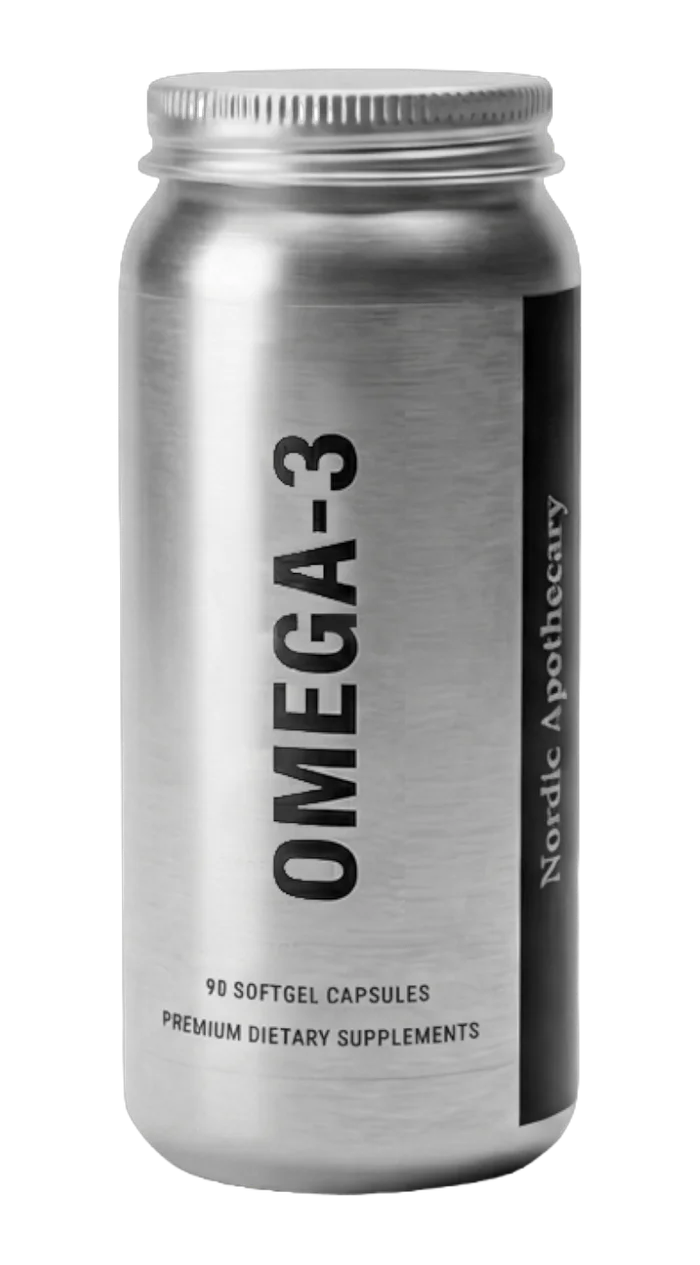
01 / FISH OIL / EPA + DHA
Omega-3
A fish-oil supplement concept centred on the omega-3 fatty acids EPA and DHA.
- EPA
- DHA
- Oil form
NORDIC APOTHECARY / B2B PARTNERSHIPS
A Norwegian supplement brand for pharmacies, specialist retailers and distributors. A focused product concept, distinctive packaging and clear ingredient information.
Develop your offer with Nordic Apothecary, or discuss a product of your own with FortFrisk. These are separate routes to partnership.

01 / CORE PRODUCTS
Omega-3 and krill oil lead our market-entry discussions. We explain their differences through composition and lipid form, rather than broad claims of superior quality.
01 / FISH OIL / EPA + DHA
A fish-oil supplement concept centred on the omega-3 fatty acids EPA and DHA.
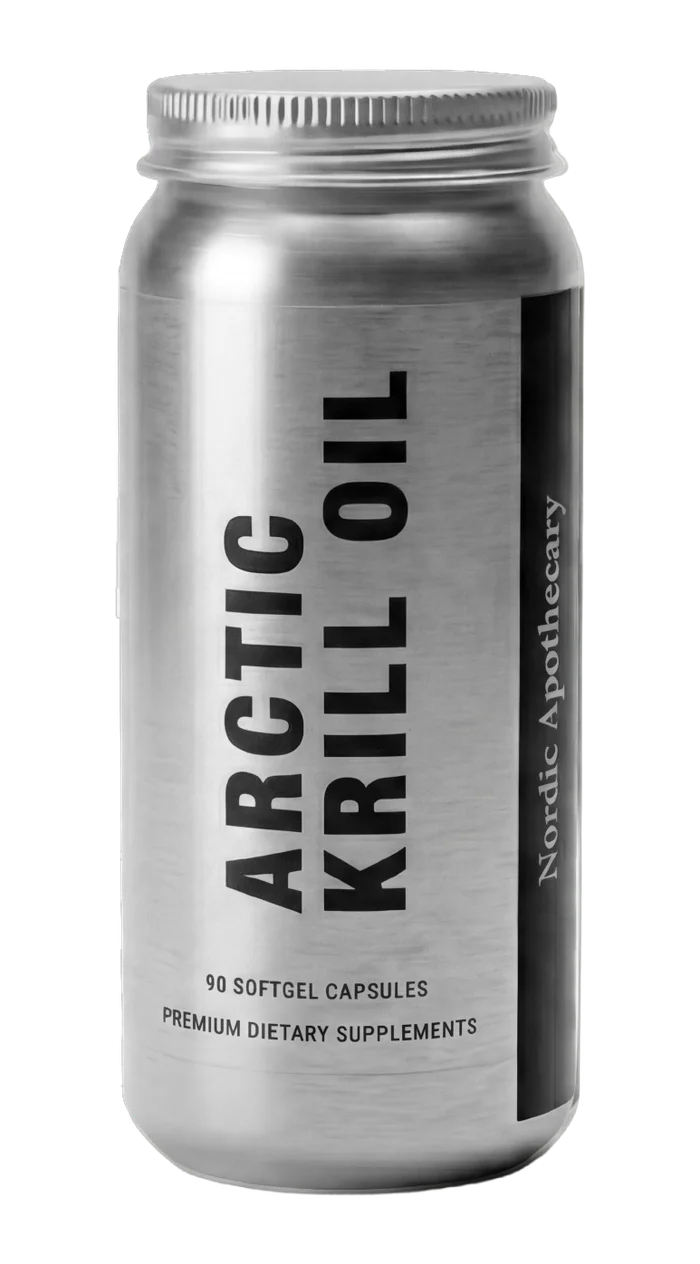
02 / PHOSPHOLIPIDS / EPA + DHA / CHOLINE / ASTAXANTHIN
Krill oil brings together omega-3 fatty acids, phospholipids, choline and naturally occurring astaxanthin. This ingredient profile distinguishes it from fish oil.
02 / COMPARISON
This comparison supports assortment planning. It is not an efficacy ranking or a recommendation to take both products together.
| Parameter | Omega-3 | Krill oil |
|---|---|---|
| Base ingredient | Fish oil | Antarctic krill oil |
| Ingredient description | EPA and DHA | EPA and DHA, phospholipids, choline, astaxanthin |
| Key quantities | EPA and DHA per daily serving | EPA, DHA, phospholipids, choline and astaxanthin per daily serving |
| Lipid form | Confirm against the ingredient specification | A proportion of omega-3 is phospholipid-associated; confirm the percentage |
| Primary allergen | Fish | Crustaceans |
PRODUCT SHEET
The product sheet should make a formulation comparable and an order unambiguous. For Omega-3 and krill oil, we separate the amount of oil from its individual components and show the basis of every declared quantity.
| Information | What the sheet specifies | Why it matters |
|---|---|---|
| Product identity | Product name, formulation version, market and format. | Keeps the quotation, sample, label and delivered batch aligned. |
| Oil and fatty-acid profile | Oil quantity; EPA and DHA separately; oil form where documented. | The total oil quantity is not the same as the amount of EPA plus DHA. |
| Krill-specific composition | Phospholipids, choline and astaxanthin, with values taken from the selected specification. | Ingredient research and product data are kept distinct. |
| Complete ingredients | Oil or powder, other ingredients, capsule shell, excipients and allergens. | A plant-based shell alone does not establish that the complete product is vegan. |
| Serving and pack | Amount per capsule and per recommended daily serving, pack count and storage instructions. | Avoids confusing a single capsule with a multi-capsule serving. |
| Batch and validity | Specification version, batch reference, applicable reports and shelf-life basis. | A document must match the product and batch it is used to describe. |
For a product being prepared for launch, the final product sheet is completed once the formulation and packaging have been selected. A supplier quotation alone is not a finished-product specification.
03 / SCIENTIFIC CONTEXT
Published studies have investigated fatty-acid profiles, circulating choline during exercise and muscle function. The examples below describe research scope. Findings must be interpreted in relation to the study population, oil preparation and dose.
These studies concern particular krill-oil preparations, not the finished Nordic Apothecary product. Research doses are not recommendations for using our product.
Bibliographic references do not identify our supplier or mean that every study investigated the same ingredient.
Request the research reviewInformation scopeSerum choline and its metabolites were assessed before racing, at the finish and the following day.
PublicationStorsve et al. Frontiers in Nutrition. 2020;7:133.
Effects of Krill Oil and Race Distance on Serum Choline and Choline Metabolites in Triathletes: A Field Study
DOI: 10.3389/fnut.2020.00133
Information scopeSelected immune markers and exercise-test performance were investigated following krill-oil supplementation.
PublicationDa Boit et al. PLOS ONE. 2015;10(9):e0139174.
The Effect of Krill Oil Supplementation on Exercise Performance and Markers of Immune Function
DOI: 10.1371/journal.pone.0139174
Information scopeOmega-3 Index, circulating choline and selected post-training markers were assessed.
PublicationDrobnic et al. Nutrients. 2021;13(12):4237.
Krill-Oil-Dependent Increases in HS-Omega-3 Index, Plasma Choline and Antioxidant Capacity in Well-Conditioned Power Training Athletes
DOI: 10.3390/nu13124237
Information scopeKnee-extensor strength, grip strength and vastus lateralis muscle thickness were investigated.
PublicationAlkhedhairi et al. Clinical Nutrition. 2022;41(6):1228–1235.
The effect of krill oil supplementation on skeletal muscle function and size in older adults: A randomised controlled trial
DOI: 10.1016/j.clnu.2022.04.007
04 / DOCUMENTATION
We agree the documentation and testing scope for the selected formulation. Existing supplier documents, commissioned laboratory work and final batch-release records have different purposes; they are not interchangeable.

The specification records which material is being used and what is declared. For oils, the agreed data include the fatty-acid profile; a separate origin or identity assessment can be considered where relevant.
For oil products, the analytical plan can cover oxidation parameters, contaminants and microbiology, using methods appropriate to the product matrix. Which tests are required and who commissions them are agreed before the order.
The container, closure, storage conditions and shelf-life documentation are assessed together. A raw-material shelf life is not automatically carried over to a repacked finished product.
The agreed dossier can include the product specification, approved label, available relevant analysis reports and batch information. Certificates are identified by issuer, scope and validity where applicable—not displayed as generic quality badges.
05 / FORTFRISK
A product brief needs more than an ingredient idea. FortFrisk can coordinate the specification, manufacturing route, packaging and delivery as one agreed project. The work may involve specialist manufacturers, packaging providers and laboratories; responsibilities and locations are defined for the selected product.
We define the ingredient identity, chemical form, composition, capsule or tablet format, intended pack and target market. The formulation, approved label and order must describe the same product.
Depending on the brief, the starting point can be a documented finished formulation, bulk capsules or a raw material that still needs formulation and encapsulation. These are different delivery scopes, with different cost and timing implications.
We coordinate the agreed container, closure and label work, with a clear assignment of filling, packing, label approval and batch coding. A packaging change is assessed against the actual product, not just its appearance.
Before dispatch, the agreed specification, batch documentation, packaging version and delivery arrangements are brought together. The party responsible for release and the receiving partner are identified in the project plan.

Nordic Apothecary remains the product brand. Developing a product under your own brand is a separate FortFrisk project.
Beyond distributing Nordic Apothecary, you can discuss a product under your own brand with FortFrisk. The brief can start with a market, an ingredient direction and a target format; you do not need to arrive with a finished formulation.
Defined development scope. Ingredient selection, formulation work, manufacturing coordination, packaging and delivery are agreed separately for your project. Broader development possibilities do not become products in the Nordic Apothecary range.
PACKAGING
The aluminium packaging language can remain consistent across the Nordic Apothecary range while the container, closure and label are specified for each product. Packaging is part of the product-development work, not an interchangeable finishing detail.
06 / DISTRIBUTION PARTNERSHIP
Building a brand in a new market takes time, local knowledge and investment. Our approach to exclusive distribution is designed to give both parties a clear basis for that commitment: agreed rights for the distributor, a realistic development plan for the brand and responsibilities on both sides.
A defined scope and term, with agreed customer protection and renewal criteria, give the partner a clearer basis for investing in the market.
We agree the launch plan, commercial milestones and measures of progress together, taking account of the market, product availability and each party’s resources.
The distributor develops local sales and customer relationships. Nordic Apothecary commits to an agreed supply, documentation and launch-support plan.

We can agree an exclusive appointment from the first market launch, rather than requiring the partner to build demand without protection. Before work begins, the written agreement defines the products, territory, relevant customer groups or channels, duration and conditions for maintaining and renewing exclusivity. Any channels or customers retained by Nordic Apothecary are identified in advance.
Within the agreed exclusive scope and while the agreement remains in force, Nordic Apothecary commits not to appoint a competing distributor or bypass the partner to take over customers covered by the agreed protection. Before launch, we define which customer relationships and approved market-development investments are covered, together with renewal and notice provisions. Commercial success is a reason to develop the partnership, not to change its rules retrospectively.
There is no standard target imposed without context. We distinguish binding purchase commitments from forecasts and other development milestones, and record how each will be measured. The plan considers both orders placed with us and the product’s progress through the market—not stock accumulation alone.
| Area | What we agree | Why it matters |
|---|---|---|
| Scope and duration | Products, territory, customers or channels, any reserved business, initial term and renewal criteria. | Both parties know where the appointment applies and how long they can plan ahead. |
| Launch readiness | Product availability, required documentation, local labels, launch tasks and the date from which performance is measured. | Targets are linked to a launch that can actually take place. |
| Purchases and replenishment | Minimum purchases, order cadence and demand forecasts, with clear definitions and agreed measurement periods. | The partner can plan stock and working capital; we can plan production and supply. |
| Market development | Relevant outlets, product listings, repeat orders and aggregate sales to the market, where appropriate. | Progress reflects real demand and a sustainable customer base. |
| Marketing and product support | Agreed campaigns, approved product materials, staff briefings, budgets and the party responsible for each task. | Investment and support are visible on both sides; no unagreed marketing bill is assumed. |
| Reviews and exceptions | Reporting format, review dates and how supply issues or other documented obstacles affect the assessment. | Both parties work from the same information and avoid surprises. |
Commercial thresholds, prices, budgets and customer-specific arrangements are agreed privately. They are not fixed by this catalogue.
Sales goals only make sense alongside the conditions needed to achieve them. The agreement records our commitments as well as those of the distributor.
Reviews use the criteria agreed at the start and consider both parties’ performance. Targets are not raised retrospectively, and obligations outside the distributor’s control are not treated as its sales failure.
Compare progress with the plan, including sales, stock, launch activity and our own supply and support commitments. Identify the reason for any shortfall.
The agreement provides for a documented improvement plan and an agreed period to address ordinary performance issues. Supply delays or missing materials on our side are taken into account; any revised milestones are agreed in writing.
Renewal follows the agreed criteria and procedure. Any change of scope or end to exclusivity follows the written grounds and notice provisions, with an agreed approach to open orders, protected customers and remaining saleable stock.
Serious contractual breaches, product-safety issues and circumstances requiring urgent action are addressed separately in the agreement. An improvement period is not a promise to continue supply in every circumstance.
No. Exclusivity can be agreed for the initial launch when scope, commitments and the development plan are settled. It starts on the date stated in the signed agreement—not automatically when discussions begin.
Any retained direct sales, existing customers or other channels are disclosed and defined before the agreement is signed. They are not introduced later as an undisclosed exception to the partner’s protection.
An ordinary shortfall triggers the review and improvement process set out in the agreement. We distinguish weak market performance from supply, documentation or launch delays, and decide next steps on that basis rather than treating every shortfall as automatic loss of exclusivity.
No. The agreement defines the protection we can provide within applicable competition rules. It is not a guarantee that every third-party, cross-border or online sale can be prevented.
No. Distribution rights are not ownership rights. Nordic Apothecary’s existing brand, packaging concept and proprietary know-how are not transferred. Use of brand materials is limited to the agreed distribution activities.
No. Products under your own brand are a separate development and production project with FortFrisk, with their own scope, commercial terms and intellectual-property arrangements.
Tell us which market and channels you can develop, which products you would start with and what support you need. We can then define a realistic launch plan and the scope of a potential exclusive appointment.
This section describes our proposed cooperation framework, not an offer granting exclusivity. Rights and obligations arise only under a signed agreement, subject to applicable law. No market appointment is announced here.
ORDERS AND DELIVERY
An order is based on an agreed product and delivery scope—not just a price per capsule. We set out what is included, which decisions are still open and which approvals start the production timetable.
| Topic | Agreed before ordering |
|---|---|
| Scope | Formulation, capsules or tablets, container, closure, labels, testing and documentation included in the offer. |
| Quantity | The minimum order for the selected product and packaging, with forecast quantities distinguished from binding purchase orders. |
| Timing | Specification and artwork approval, material availability, manufacturing, testing, packing and transport. |
| Delivery | Named delivery point, responsibilities for transport and formalities, and receiving requirements for the actual route. |
| Continuity | Reorder planning, notification of specification changes and how documented delays affect the agreed launch milestones. |
Minimum quantities, prices and lead times are confirmed for the project. They are not universal catalogue promises.
POLAND / MARKET PREPARATION
Preparing a product for Poland involves more than translating its label. Together, we identify the documents, responsible operators and tasks needed before sale. Each product has its own launch assessment, starting with Omega-3 and krill oil.

Before a food supplement is first placed on the Polish market, the Chief Sanitary Inspector must be notified. Notification and a register entry are not product authorisation, proof of efficacy or a quality certificate. The relevant food business operators remain responsible for compliance and safety. GIS may investigate and request further information.
Sources: GIS-FAQ, GIS-NOTICE, EU-FOOD-LAW
Identify the market operator, the operator responsible for label information, the GIS notifier and, where relevant, the importer. Check the required food-business registration or approval for the actual activities.
Sources: GIS-NOTICE, PL-ESTABLISHMENT, EU-FIC
Check the full formulation, daily serving, allergens, ingredient legality and quality documents. Match the specific krill ingredient to its applicable entry in the EU novel-food list.
Sources: EU-SUPPLEMENTS, EU-NOVEL, EU-CONTAMINANTS
Prepare Polish labelling and product material for the responsible operator’s sign-off. Review mandatory information and the use of health claims, including online product listings.
The eligible operator submits a correctly signed notification through the current system identified by GIS. Retain the submission receipt and the version of the product dossier that was filed.
Sources: GIS-NOTICE
Confirm route-specific formalities, batch acceptance, storage and traceability, together with packaging obligations. GIS notification does not replace these steps.
Sources: PL-CUSTOMS, EEA-ANIMAL-IMPORTS, EU-HYGIENE, PL-BDO
Agree complaints handling, safety escalation, batch withdrawal or recall and document changes when the product changes. Compliance continues beyond the first order.
Sources: EU-FOOD-LAW, EU-FIC
We agree the support provided by Nordic Apothecary and FortFrisk for each project. This can include assembling documents and coordinating work with a Polish food-law specialist. The work plan names the responsible parties, deliverables and limits of any representation.
Production planning and market preparation should use the same product version. We can help assemble the information needed for Polish labelling, the agreed regulatory review and the first delivery, with responsibilities assigned before launch.
Composition, shell ingredients, allergens, serving, packaging, storage and the relevant product and batch documents.
The project identifies the label-responsible operator, the GIS notifier and, where relevant, the importer. Coordination support does not automatically transfer these roles to FortFrisk or the distributor.
Origin information, manufacturing and packing locations, delivery documentation and any import formalities are checked for the selected route.
The joint launch plan connects documentation, supply and sales milestones. Documented delays and required changes are reviewed together before evaluating distributor performance.
Prepare the product and manufacturer names, product form, food-supplement classification, complete qualitative and quantitative composition, Polish label artwork and notifier details. Include previous notification information from another EU state where applicable. Specifications, test reports and ingredient documents support the wider compliance dossier; not every document is a mandatory attachment to every notification.
Sources: GIS-NOTICE
Review all ingredients, including the capsule shell and additives, highlighted allergens, the recommended daily serving and quantities of the substances characterising the product. Include supplement-specific warnings, the food-supplement designation, appropriate quantity information, responsible-operator details, storage, durability and batch identification, and legibility. A QR code does not replace mandatory on-pack information.
Sources: PL-LABEL, EU-FIC, EU-SUPPLEMENTS
For Omega-3, assess the oil’s origin and specification, EPA and DHA in the daily serving and the capsule composition. For krill, also match ingredient identity, process and parameters to the applicable novel-food authorisation and its use and labelling conditions. Assess fish, crustaceans and shell ingredients separately for allergens. A research dose is not automatically an authorised product serving.
Sources: EU-NOVEL, EU-NOVEL-LIST, EU-FIC, EU-SUPPLEMENTS
Agree product-appropriate evidence for composition, contaminants, oil oxidation and stability in the final packaging. Reports and certificates are checked for their scope, product or batch, applicable requirements and validity. The testing plan reflects the product and the risks involved.
Sources: EU-CONTAMINANTS, EU-FOOD-LAW, EU-NOVEL-LIST
Review labels, websites, catalogues and pharmacy material together. A study does not automatically permit a health promise; the claim and the finished composition must meet the applicable conditions. Do not attribute disease treatment to a supplement. For online sales, mandatory food information is available before purchase, subject to the legal exception for durability dating, and complete information accompanies delivery.
Sources: EU-CLAIMS, EU-CLAIMS-REGISTER, EU-FIC
Distinguish manufacture, packing location and country of dispatch. Assess customs and tax separately from sanitary requirements. Norway participates in the EEA sanitary system, so not every shipment from Norway has the same requirements as first entry from outside the EU/EEA. Establish the documents for the actual product and route.
Sources: PL-CUSTOMS, PL-TARIFF, EEA-ANIMAL-IMPORTS, EEA-PRENOTIFICATION
Review product-contact material documents and the Polish obligations of the operator placing packaged goods on the market, including BDO. Account for phased PPWR application from 12 August 2026, including current PFAS restrictions in food-contact packaging, and plan for subsequent deadlines where applicable.
Procurement terms and production know-how remain protected. At the same time, the appropriate operators and authorities receive the legally required manufacturer, composition and product information. We distinguish confidential business documentation from information that must be filed or disclosed.
Sources: GIS-NOTICE, EU-FIC, EU-FOOD-LAW
The shared timeline links documentation, labels, notification, product availability and delivery. The agreement specifies when performance measurement starts and how documented regulatory or supply delays affect targets. This protects both parties from judging sales against a launch that could not take place.
No. The correct procedure is notification of first market placement. We do not present a filing receipt as safety certification or product approval.
Sources: GIS-FAQ
GIS does not issue market authorisation for food supplements. A valid notification must nevertheless precede first placement, and all applicable requirements must be met. A register entry or absence of a reply does not justify selling a non-compliant product.
Sources: GIS-FAQ, EU-FOOD-LAW
Document preparation and coordination can be agreed. The eligible notifier and representation arrangements depend on the operating model. A commercial partnership does not itself transfer statutory responsibility to the brand or FortFrisk.
Sources: GIS-NOTICE, EU-FOOD-LAW
It does not replace a Polish-market assessment. Check Polish labelling, notification, the relevant operator and the supply route; use other-market documents only where applicable.
Sources: GIS-NOTICE, EU-FIC
Select the products, confirm the distribution model and review the documents available. Together we can define the work, responsible people and timeline for a documented market launch.
Process and support information, not confirmation that a specific product complies. Services and responsibilities require agreement; check current requirements and the actual product dossier before market placement.
Sources last checked: 21 September 2026
Bilberry extract, marine collagen and coenzyme Q10 complement the assortment concept. Their commercial readiness is confirmed separately.
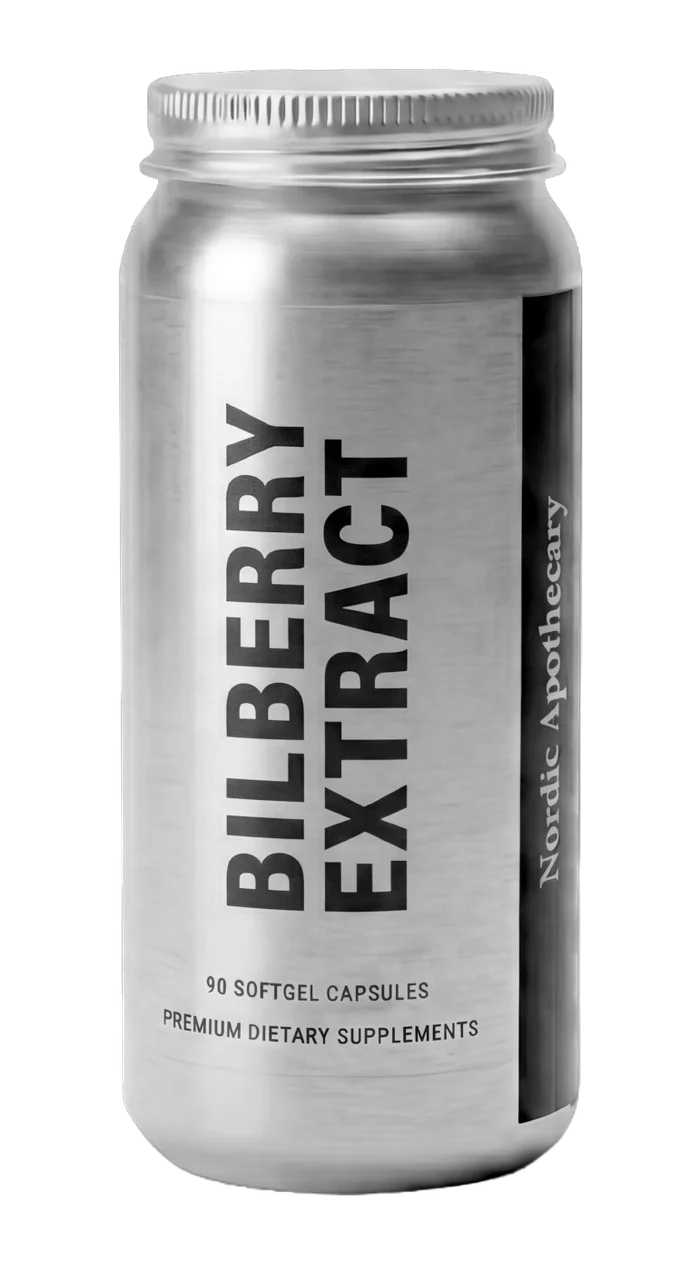 Bilberry extract
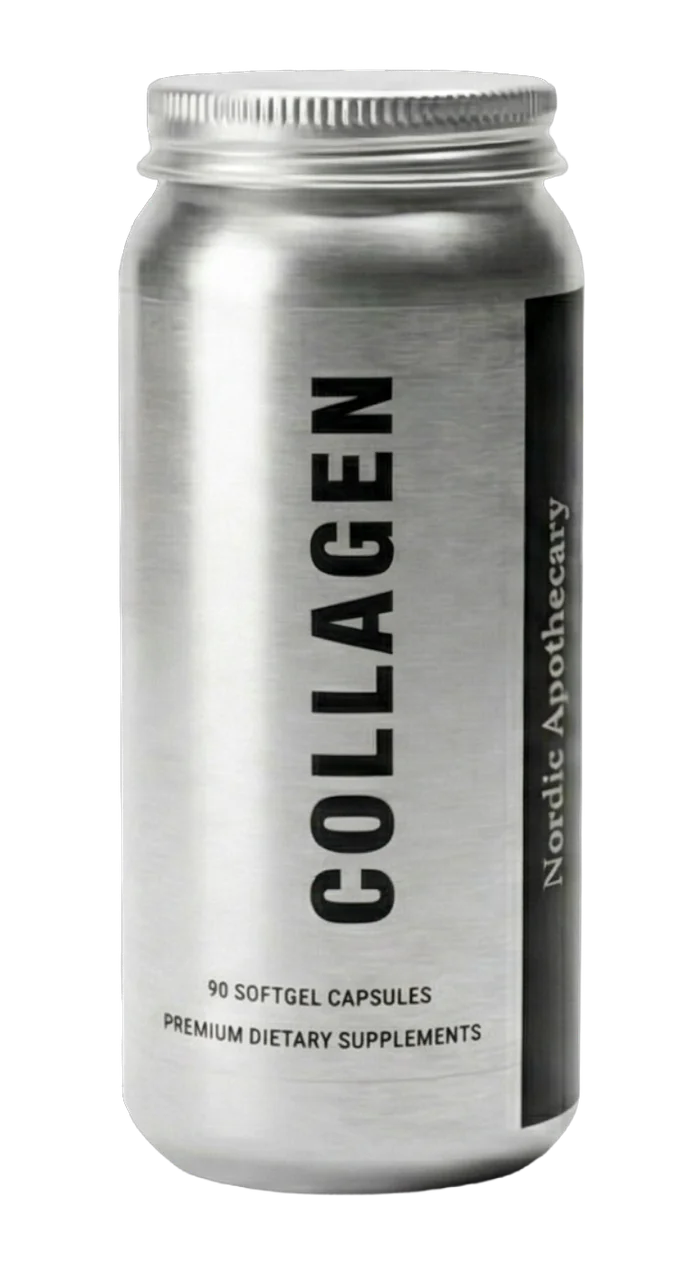 Marine collagen
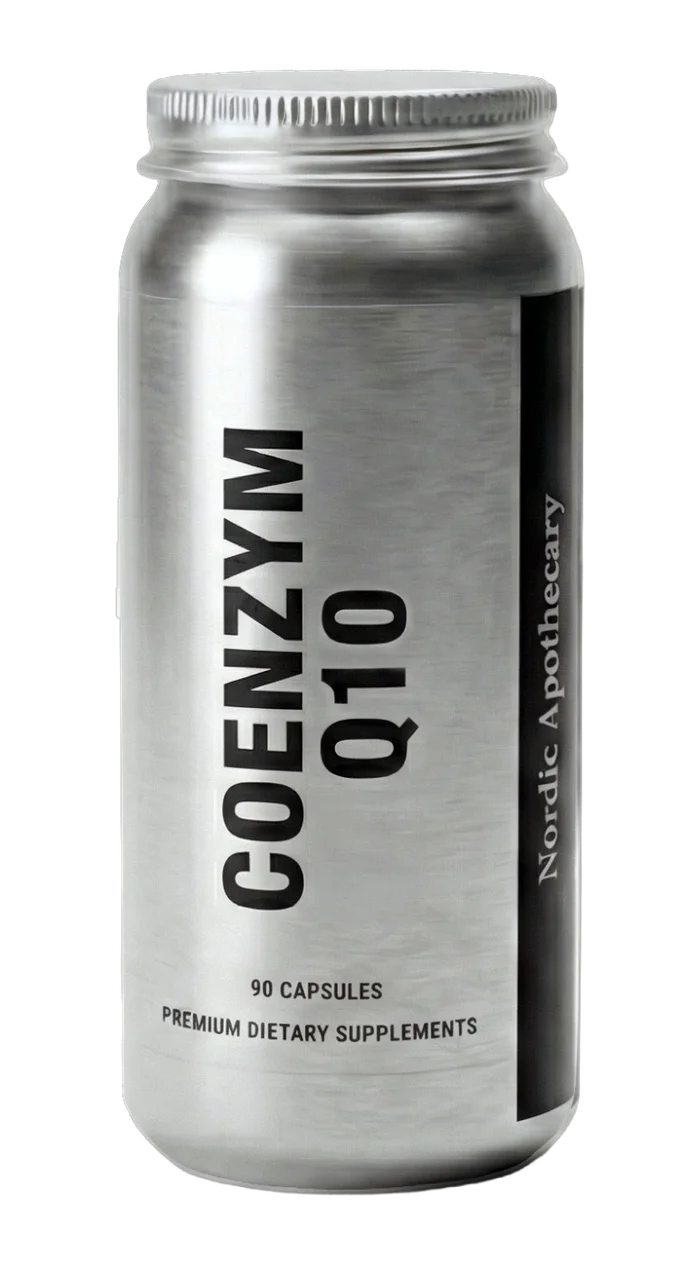 Coenzyme Q10
For a berry formulation, botanical species, plant part and the distinction between whole-fruit powder and extract should be explicit. A percentage alone does not identify the ingredient.
Botanical identity, ingredient form and quantitative composition are confirmed before the final product sheet is issued.
Collagen products can be single-ingredient or multi-ingredient formulations. The product description should state which formulation is supplied and identify the sources of its components.
Composition is published from the selected finished-product specification, not assembled from several supplier options.
A Q10 specification should state its form and amount alongside the complete formulation. Hard capsules and oil-based softgels are different product formats.
The final Q10 formulation is selected as a complete product, not by comparing the headline ingredient amount alone.


Nordic Apothecary values clarity in its assortment, ingredient information and packaging. The range should feel coherent, and each product should be understandable to both the partner and the customer.

Tell us which products interest you, where you operate and which sales channels you plan to use. An order forecast will help define the next steps.